October 1, 2026
Discover which personal, legal, academic and business documents commonly require certified translation and what to check before submitting them.
If you have been asked to provide translated documents, one of the first questions is usually: Does the translation need to be certified?
The answer depends primarily on who will receive the document and why they need it.
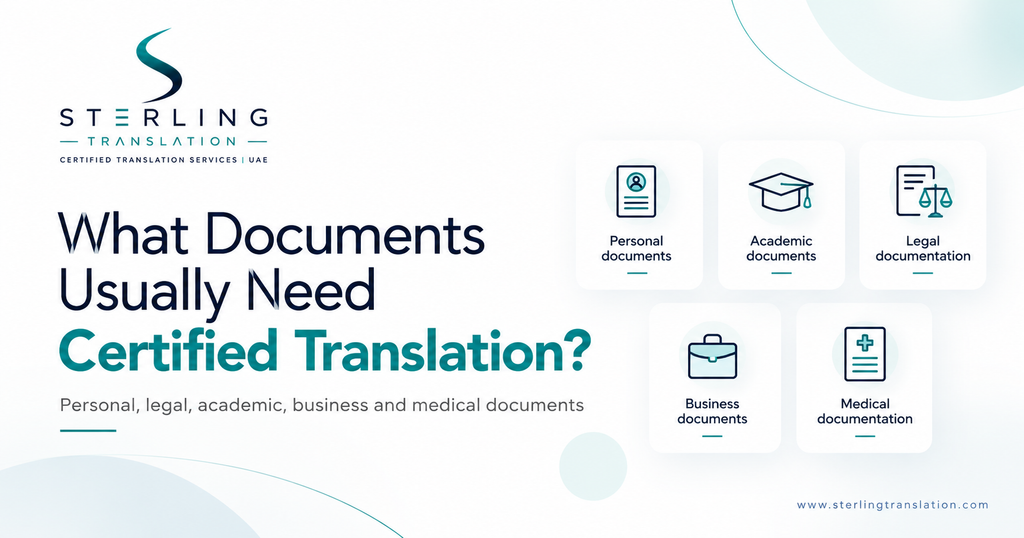
Certain categories are more likely to involve formal translation requirements.
Personal documentation may include:
These documents often contain exact names, dates and official terminology, making accuracy particularly important.
Students and professionals may need translations of:
Institutions may have their own requirements regarding certification and format.
Legal translations can involve:
Because legal wording can carry specific meaning, these projects should be handled carefully.
Companies operating internationally may require translation of:
Consistent terminology becomes particularly important when multiple documents relate to the same organization.
Medical translation may cover:
These documents can contain specialized terminology and should be assigned accordingly.
There is no universal rule that applies to every document in every situation.
Before ordering a translation, ask the organization receiving your documents whether it requires a normal translation, certified translation, particular format, original copy or additional authentication.
Clarifying this first can prevent unnecessary delays.
Sterling Translation provides professional document translation for personal, corporate and specialized requirements.
Visit http://sterlingtranslation.com to request a quotation.