October 9, 2026
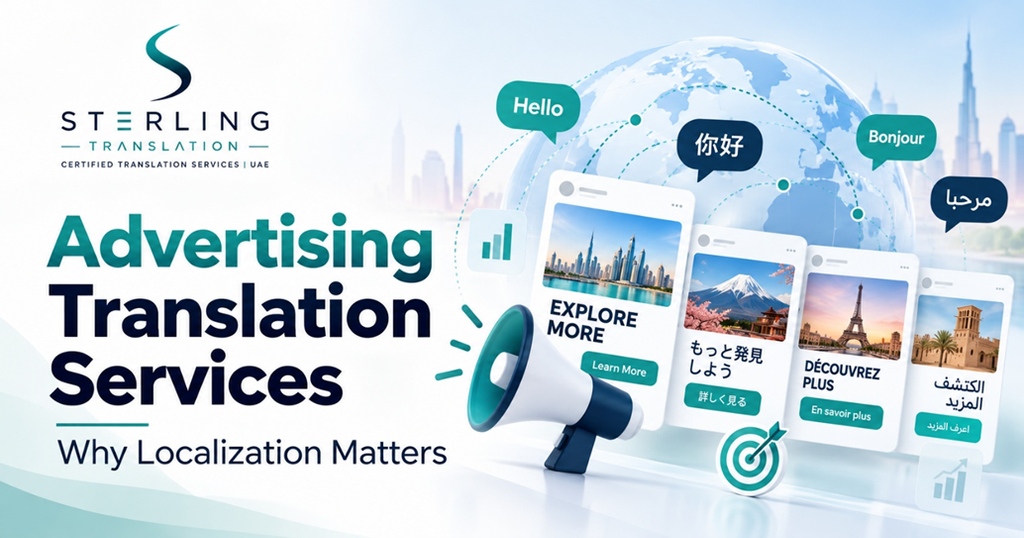
Professional advertising translation services do much more than convert words from one language into another. Advertising is built around the tone, persuasion, emotion and cultural relevance, so a campaign that works well in one market may not have the same impact when translated literally.
For global brands, accurate advertising translation needs to preserve the original message while making it sound natural and appropriate for the target audience.
That is why advertising content often requires a combination of translation, localization and creative adaptation.
1. Advertising Translation Services Must Preserve the Message
The first goal of advertising translation services is to preserve the meaning and purpose of the original campaign.
Advertising copy is often short, but every word may carry weight.
A headline, slogan or call to action may be designed to:
A literal translation may preserve the words but lose the persuasive effect.
Professional advertising translation focuses on both meaning and impact.
2. Advertising Translation Requires Cultural Awareness
Culture strongly influences how advertising is understood.
Images, idioms, humor, colors and references may have different meanings in different markets.
This is where advertising translation services overlap with localization.
A campaign may need changes to:
The goal is not to change the brand unnecessarily, but to make the campaign appropriate for the intended audience.
3. Marketing Translation Services Should Protect Brand Voice
A brand should still sound like itself in another language.
Professional marketing translation services should maintain the brand’s tone, personality and communication style.
For example, a luxury brand may use polished and refined language, while a youthful consumer brand may use a more energetic and informal tone.
That distinction should remain clear in every language.
Without consistency, the brand may sound fragmented across markets.
4. Advertising Translation Services Need Consistent Terminology
Terminology consistency matters in advertising as much as it does in business documents.
Product names, service descriptions and campaign phrases should normally remain consistent across related content.
Useful reference materials can include:
Providing these resources helps advertising translation services maintain consistency across websites, social media, print ads and digital campaigns.
5. Ad Localization Improves Relevance
Ad localization goes further than standard translation.
It adapts content so it feels natural to a specific audience.
This may involve changes to:
A localized advertisement should feel as though it was created for the target market rather than simply translated from another language.
6. Campaign Translation Must Consider Every Format
Advertising campaigns often appear across multiple channels.
A single campaign may include:
Professional campaign translation should maintain consistency across all of these formats.
The same message may need to be adapted differently depending on space limits, platform style and audience expectations.
7. Advertising Translation Services Should Include Review
Review is an important part of professional advertising translation services.
Marketing content should be checked not only for grammar, but also for:
Where possible, the translated campaign should also be reviewed in the final layout.
This helps identify issues such as text that is too long for a banner or wording that does not work visually.
Why Literal Advertising Translation Can Fail
Advertising depends on emotion and persuasion.
A literal translation may be grammatically correct but still sound awkward or weak.
For example, a slogan that uses wordplay in English may not make sense in another language.
In these situations, the translator must understand the original intention and recreate the message naturally.
This is why advertising translation services often require more creative input than straightforward document translation.
Advertising Translation vs Localization
Translation and localization are related, but they are not identical.
Advertising translation focuses on transferring the message accurately into another language.
Localization adapts the message for the target culture and market.
For many advertising campaigns, both are necessary.
A brand may need accurate translation of product information while also requiring localization of headlines, slogans and calls to action.
Multilingual Advertising Supports Global Growth
As businesses expand into international markets, multilingual advertising becomes increasingly important.
Customers are more likely to engage with content that feels clear, relevant and familiar.
Professional translation helps brands communicate more effectively across languages without losing the message that made the original campaign successful.
Consistency across markets also supports a stronger global brand identity.
What Should You Provide to an Advertising Translation Company?
Before translation begins, provide as much relevant context as possible.
Useful materials include:
This information helps the translator make better decisions and reduces unnecessary revisions.
Frequently Asked Questions About Advertising Translation Services
What are advertising translation services?
Advertising translation services involve translating and adapting advertising content for different languages and markets while preserving the original message, tone and brand identity.
What types of advertising content can be translated?
Common examples include:
Is advertising translation the same as localization?
Not exactly.
Translation focuses on language, while localization adapts content for a specific market or culture.
Advertising campaigns often benefit from both.
Why is brand voice important in advertising translation?
Brand voice helps customers recognize and connect with a company.
If the tone changes significantly between languages, the brand may appear inconsistent.
Can slogans be translated literally?
Sometimes, but not always.
Many slogans depend on humor, wordplay or cultural context. In these cases, creative adaptation may be needed.
Do advertising translation services cost more than normal translation?
They can.
Advertising content may require localization, creative adaptation and additional review, which can increase the time and expertise involved.
Choose Advertising Translation Services That Understand Your Brand
Professional advertising translation services should protect more than the meaning of your words.
They should preserve your brand voice, adapt your message to the target audience and help your campaign communicate naturally across markets.
For global advertising, translation, localization and cultural awareness often need to work together.
Sterling Translation supports professional translation for marketing, advertising and corporate content.
Need advertising translation services for your next campaign? Visit sterlingtranslation.com to discuss your project.