October 17, 2026
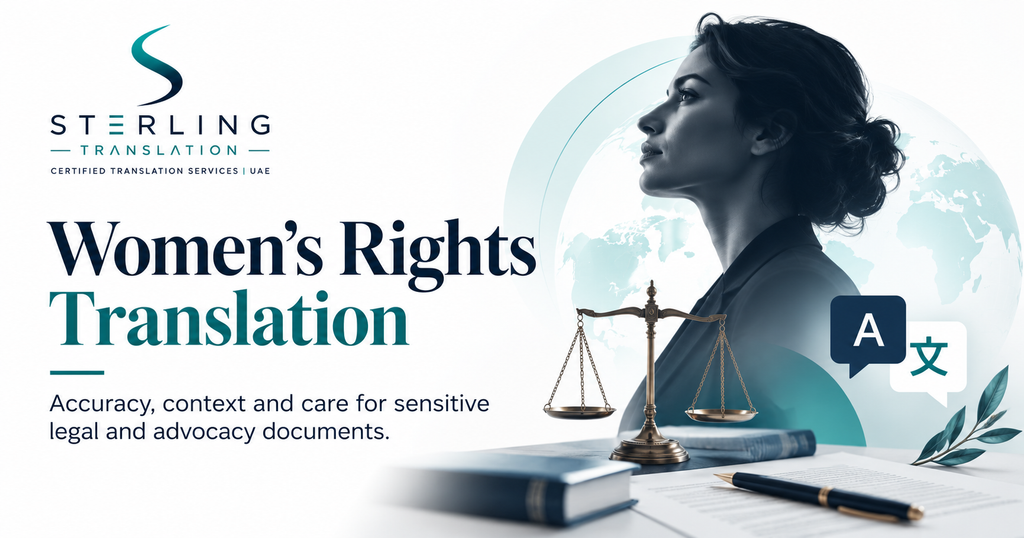
Professional women’s rights translation requires more than converting words from one language into another. Documents related to legal rights, equality, protection, advocacy and public policy often contain sensitive terminology that must be translated accurately and with careful attention to context.
A small wording change can alter the meaning of a legal provision, weaken an advocacy message or create confusion for the people who rely on the information.
That is why women’s rights content should be translated by professionals who understand both the language and the subject matter.
Why Women’s Rights Translation Requires Specialist Knowledge
Women’s rights documents often sit at the intersection of law, policy, healthcare, social services and public communication.
A translator may encounter terminology relating to:
Accurate women’s rights translation requires an understanding of how these terms are used in the relevant legal, social or institutional context.
General language fluency alone may not be enough.
Legal Context Matters in Women’s Rights Translation
Many women’s rights documents have legal or official significance.
This may include legislation, court documents, policy papers, complaints, declarations, agreements or rights-based guidance.
In these cases, the translator must preserve the meaning of the source text without introducing assumptions or changing the legal effect.
This is particularly important in legal rights translation, where a seemingly minor change in wording may affect how a statement is interpreted.
Human Rights Translation Depends on Precise Terminology
Women’s rights are closely connected to broader human rights translation.
Terms relating to equality, protection and discrimination may have established meanings in legal and policy contexts.
The translator should use terminology consistently throughout the document and avoid unnecessary variation.
For longer projects, approved glossaries can help maintain consistency across:
Terminology consistency helps ensure that the same concept is communicated clearly across all materials.
Cultural Sensitivity Is Important
Some women’s rights topics are highly sensitive.
The same concept may be discussed differently across cultures, institutions and legal systems.
Professional women’s rights translation should preserve the original meaning while using language that is appropriate, respectful and clear for the target audience.
This does not mean changing the message. It means understanding how to communicate the message accurately without creating unnecessary ambiguity or offense.
Advocacy Translation Should Preserve Tone and Intent
Advocacy content often aims to inform, persuade or encourage action.
This means tone matters.
Advocacy translation may involve:
A literal translation may be technically correct but still fail to carry the same impact.
The translator should preserve both the meaning and the intended tone of the original content.
Women’s Rights Translation for NGOs and Organizations
Non-governmental organizations, charities and international institutions often work across several languages.
They may need translation for:
Professional NGO translation services can help organizations communicate consistently across regions and audiences.
When multiple documents are related, shared terminology and reference materials can improve consistency.
Names, Dates and References Need Careful Checking
Women’s rights documentation may contain personal, legal or institutional details that must be reproduced accurately.
These can include:
A professional review should verify these details against the source document.
Even a small transcription error can create practical problems in legal, policy or official use.
Confidentiality Matters in Sensitive Translation
Some women’s rights documents may contain confidential or highly sensitive information.
This can include:
Clients should consider how files are submitted, accessed, stored and delivered.
A professional provider handling women’s rights translation should have clear procedures for confidentiality and secure document handling.
Review Should Be Part of the Translation Process
A structured quality review is especially important for sensitive and rights-based content.
The review should check:
Important women’s rights translation projects benefit from being compared carefully with the original before delivery.
This helps identify omissions, inconsistencies and wording that may need clarification.
Gender Equality Translation Should Remain Consistent Across Documents
Organizations working on equality issues often publish multiple related materials.
These may include policy documents, reports, training content and public communication.
For gender equality translation, consistent terminology is important because the same concepts may appear across several documents.
Using approved wording helps maintain clarity and supports a more coherent message across languages.
How to Prepare Women’s Rights Documents for Translation
Before sending documents for translation, provide as much relevant context as possible.
Useful information may include:
The more context the translator has, the easier it is to make accurate decisions.
Why Professional Women’s Rights Translation Matters
The goal of women’s rights translation is not simply to make content understandable in another language.
The translation should preserve meaning, legal context, terminology and tone as accurately as possible.
This requires a combination of:
These elements are especially important when the translated material is used for legal, institutional, advocacy or public-information purposes.
Choose Women’s Rights Translation With the Right Expertise
Professional women’s rights translation requires accuracy, sensitivity and a clear understanding of the context behind the words.
Whether the content is legal, policy-based, educational or advocacy-focused, the translator should preserve the original meaning while making the text clear and appropriate for the target audience.
Sterling Translation supports professional translation for legal, official, NGO and specialized documentation where accuracy and clarity matter.
To discuss a women’s rights translation requirement, visit sterlingtranslation.com.